
Why Memory Foam Pillows Flatten: Science & Solutions
Table of Contents
- Why Memory Foam Pillows Flatten: The Core Mechanisms
- The Role of Body Heat in Foam Compression
- Solid Block vs. Shredded Memory Foam: Which Flattens Faster?
- How Sleep Position Affects Pillow Longevity
- How to Stop Pillows from Going Flat: Maintenance Strategies
- How to Clean Memory Foam Pillows Without Damage
- Signs It Is Time to Replace Your Pillow
- When to Choose a Cervical Pillow Over Standard Memory Foam
- Frequently Asked Questions
Last Updated: September 20, 2026
Why Memory Foam Pillows Flatten: The Core Mechanisms
Memory foam pillows flatten because the material experiences both mechanical compression and chemical degradation over time. When you rest your head on the pillow night after night, the foam's cellular structure gradually loses its ability to spring back to its original shape. This isn't a manufacturing defect, it's the inevitable result of how memory foam behaves under sustained pressure and heat.
The process begins the moment you use the pillow. Your body weight compresses the foam cells, and while memory foam is designed to recover, repeated compression cycles eventually wear down the material's resilience. The polyurethane cells that give memory foam its signature contouring ability have a finite lifespan. After thousands of compressions, they lose their elasticity, leaving you with a pillow that no longer provides the support it once did.
Mechanical Compression vs. Chemical Degradation
Mechanical compression is the more obvious culprit. Every night, your head creates an indentation in the foam. The pillow's job is to recover from that indentation, but over months and years, the foam's rebound capacity diminishes. The cells don't spring back as quickly or completely as they did when the pillow was new.
Chemical degradation, however, is equally important and often overlooked. Memory foam is made from polyurethane, a material that breaks down when exposed to heat, moisture, and oxygen. This process happens slowly but continuously. The bonds between foam cells weaken, and the material becomes more brittle. Off-gassing, the release of volatile organic compounds, is one visible sign of this chemical breakdown, though it's most noticeable in new pillows.
The two processes work together. Mechanical stress accelerates chemical degradation, and chemical breakdown makes the foam more susceptible to mechanical damage. A pillow that experiences both factors simultaneously will flatten faster than one that only experiences one.
How Body Heat Accelerates Cell Structure Breakdown
Your body temperature is the hidden accelerant in pillow deterioration. Memory foam is thermally sensitive by design, it softens when warm and firms up when cool. This is what makes it conform to your head and neck so effectively. However, sustained heat exposure degrades the foam's molecular bonds.
Night after night, your body heat works on the pillow's cell structure. The polyurethane begins to break down at the molecular level. This thermal stress compounds the mechanical compression happening simultaneously. A pillow in a cool bedroom will last longer than one in a warm room, all else being equal. If you sleep hot or live in a warm climate, your pillows will flatten faster.
The visco-elastic properties that define memory foam, that slow, conforming feel, rely on the material's chemical integrity. As heat degrades the polymer chains, the foam loses its ability to hold that conforming quality. What you're left with is foam that feels more like conventional polyurethane: less responsive, less supportive, and less comfortable.
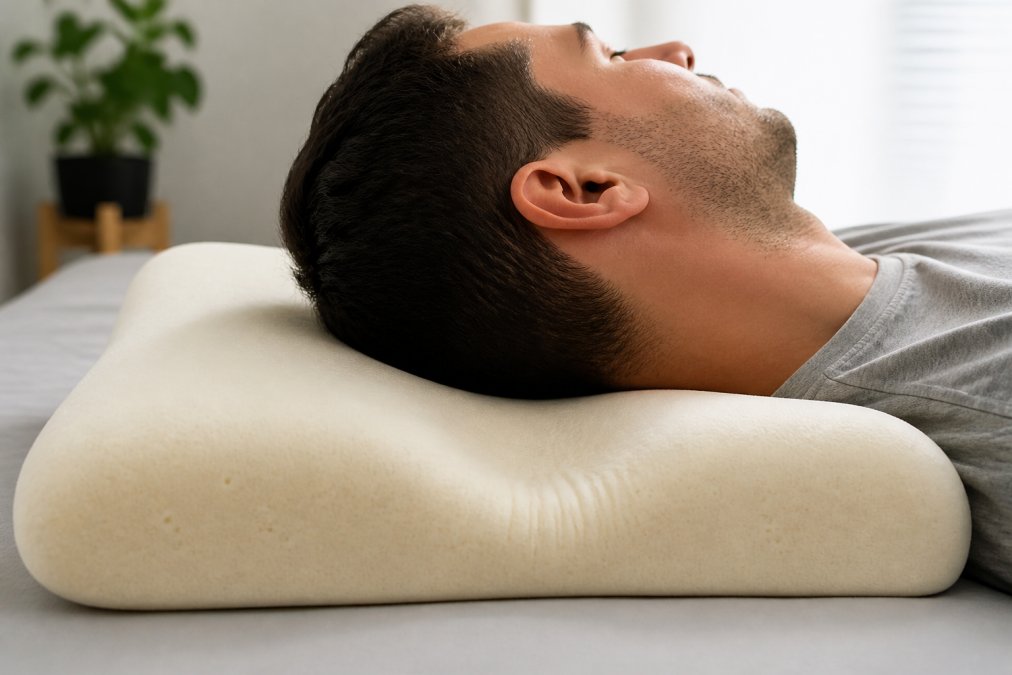
The Role of Body Heat in Foam Compression
Body heat doesn't just soften the foam temporarily, it actively degrades it over time. The thermal sensitivity that makes memory foam responsive also makes it vulnerable. Every sleep session subjects the pillow to hours of sustained heat, which accelerates both the mechanical wear and the chemical breakdown of the material.
When you lie down, your head transfers heat directly into the foam. The surface temperature of the pillow rises significantly above room temperature. This warmth causes the polyurethane to soften, which increases compression. The foam compresses more deeply under your weight when it's warm than it would when cool. This deeper compression, repeated night after night, leaves a permanent impression.
The heat also drives moisture deeper into the foam. Sweat from your head and neck penetrates the material, and this moisture interacts with the polyurethane structure. The combination of heat and moisture accelerates the breakdown of the foam's cell bonds. Over time, the pillow absorbs moisture that it cannot fully release, and this trapped moisture contributes to material fatigue and structural degradation.
Solid Block vs. Shredded Memory Foam: Which Flattens Faster?
Solid block memory foam and shredded memory foam have different failure modes, and understanding the difference matters when choosing a pillow.
Solid block foam is a single, unified piece of material. When it flattens, the entire structure loses its support uniformly. The indentation from your head becomes permanent across the whole block. Shredded foam, by contrast, consists of small pieces that can shift and redistribute. When one section compresses, the surrounding shreds can move to fill gaps, offering some recovery. However, shredded foam has more surface area exposed to air and moisture, which accelerates chemical degradation.
Solid block pillows typically last longer before noticeable flattening occurs, but when they do flatten, the loss of support is dramatic. Shredded foam pillows may show gradual softening over time, but they can maintain usable support longer because the material can redistribute. The trade-off is that shredded foam requires more maintenance, it needs regular fluffing to maintain its loft and support characteristics.
Density matters as much as structure. A high-density solid block foam resists compression better than low-density foam, but it also retains more heat, which can accelerate chemical degradation. A well-designed shredded foam with moderate density and good airflow can actually outperform a dense solid block in terms of overall lifespan, provided it receives proper care.
How Sleep Position Affects Pillow Longevity
Your sleep position directly determines how quickly your pillow flattens. Side sleepers apply concentrated pressure to a smaller area of the pillow, creating deeper, more localized indentations. Back sleepers distribute their weight more evenly, which typically results in slower, more uniform compression. Stomach sleepers, who use minimal pillow support, experience the least compression overall.
Side sleepers face the greatest challenge with pillow durability. The concentrated pressure on one side of the pillow creates a pronounced indentation that becomes permanent faster. Over time, the unsupported side of the pillow may develop a ridge, while the pressure side flattens completely. This uneven compression accelerates the pillow's decline into an unusable state.
Back sleepers experience more balanced wear. Their weight is distributed across a larger surface area, so no single section of the pillow bears excessive stress. The compression is more uniform, which means the pillow maintains a more consistent level of support across its surface as it ages. Back sleepers typically get longer life from their pillows before noticeable flattening becomes problematic.
Combination sleepers, those who switch positions throughout the night, actually benefit from this habit. Different pressure points prevent any single area from bearing the full brunt of compression. The varied stress distribution allows the foam to recover somewhat between position changes, extending the pillow's usable lifespan.
The cervical spine's alignment needs also affect how quickly a pillow seems to fail. A pillow that doesn't properly support your sleep position will feel flat long before the foam has actually degraded significantly. This is why a pillow's effectiveness depends not just on material durability, but on whether it's engineered for your specific sleep posture.
How to Stop Pillows from Going Flat: Maintenance Strategies
Preventing premature flattening starts with proper care. The most effective approach combines regular maintenance with environmental control. While you cannot stop the aging process entirely, you can significantly extend your pillow's useful lifespan.
Temperature management is the first line of defense. Keep your bedroom cool, ideally between 60 and 67 degrees Fahrenheit. A cooler environment slows the chemical degradation of the foam and reduces the depth of compression during sleep. If you sleep hot, consider using moisture-wicking bedding that pulls heat away from the pillow.
Moisture control is equally critical. Sweat and humidity accelerate foam degradation. Use a pillow protector that is waterproof on the bottom but breathable on top. This barrier prevents sweat from soaking into the foam while allowing air circulation. Wash your pillowcase regularly, at least weekly, to minimize the accumulation of sweat and skin cells that break down the foam's surface.
Rotation and repositioning help distribute wear more evenly. Rotate your pillow 180 degrees every few weeks so that different sections bear your head's weight. If your pillow has a designated top and bottom, flip it occasionally as well. This simple practice prevents the deep, localized indentations that characterize premature flattening.
Fluffing Techniques That Actually Work
Fluffing is not a cure for flattening, but it is an effective temporary recovery method. When done correctly, fluffing redistributes the foam and restores some loft and support.
For solid block pillows, gentle hand fluffing works best. Grasp opposite corners of the pillow and pull them apart with moderate force, then release. Repeat this motion several times, working different sections of the pillow. The goal is to gently stretch the foam and encourage the cells to re-expand. Avoid aggressive squeezing or kneading, which can damage the foam's cell structure.
Shredded foam pillows respond better to vigorous fluffing. Grab the pillow firmly and shake it with deliberate motions, allowing the shreds to shift and resettle. You can also punch the pillow gently with your fist to break up any compressed areas. This redistributes the shreds more evenly throughout the cover, restoring height and support.
Placing your pillow in a dryer on low heat for 10-15 minutes can also help. The gentle tumbling and warmth allow the foam to relax and expand. Add a clean tennis ball to the dryer, it bounces around and helps separate compressed areas. This method works particularly well for shredded foam pillows. For solid block pillows, use the lowest heat setting to avoid damaging the material.
Fluffing works best when done regularly, before the pillow becomes severely compressed. A pillow that receives weekly fluffing will maintain usable support far longer than one that is neglected until it becomes completely flat.
Pillow Protectors and Their Impact on Durability
A quality pillow protector is one of the most underrated tools for extending pillow life. Unlike a standard pillowcase, a protector creates a barrier between your pillow and external moisture, dust, and body oils.
Waterproof protectors are essential. They prevent sweat from penetrating the foam, which means the foam doesn't absorb moisture that accelerates chemical degradation. The protector takes the brunt of moisture exposure, and you can wash it regularly. This keeps the foam itself in a drier state, which slows material fatigue significantly.
Breathability matters as much as waterproofing. A protector that traps moisture against the pillow will cause mildew and accelerate breakdown. Choose a protector with a waterproof bottom layer and a breathable top layer. This design sheds moisture while allowing air circulation. Your pillow stays dry, and the foam's longevity increases measurably.
Protectors also reduce dust mite accumulation and allergen buildup, which can compromise the pillow's structural integrity over time. A protected pillow stays cleaner longer, which means less breakdown of the foam's surface layer.
The investment in a quality protector, typically 20-30 dollars, pays for itself many times over by extending your pillow's lifespan by months or even years. Combined with regular fluffing and proper maintenance, a protector transforms how long a pillow remains supportive and comfortable.
How to Clean Memory Foam Pillows Without Damage
Cleaning memory foam requires a gentle approach. Aggressive washing damages the foam's cell structure and accelerates flattening.
Spot cleaning is the safest method for most stains. Mix a small amount of mild dish soap with cool water to create a cleaning solution. Dip a clean cloth into the solution and gently dab the stained area. Do not rub or scrub, patting motions minimize damage. Rinse with a separate cloth dampened with clean water, then pat dry with a towel.
For deeper cleaning, hand washing in cool water works well. Fill a bathtub with cool water and add a small amount of mild detergent. Submerge the pillow and gently squeeze the soapy water through the foam. Do not wring or twist the pillow, these actions damage the cellular structure. Rinse thoroughly with cool water until all soap is removed. Gently press out excess water with your hands, then allow the pillow to air dry completely in a well-ventilated area. This process takes 24-48 hours, so plan accordingly.
Never use hot water, bleach, or harsh chemicals. These break down the polyurethane structure and accelerate degradation. Machine washing is also off-limits, the agitation and spin cycle will damage the foam irreparably.
Dry cleaning is not recommended for memory foam. The solvents used in dry cleaning can dissolve or weaken the foam's bonds. Air drying in sunlight is beneficial for killing bacteria and mold, but extended UV exposure can also degrade polyurethane over time. A few hours of indirect sunlight is fine; avoid leaving the pillow in direct sun for extended periods.
Signs It Is Time to Replace Your Pillow
A memory foam pillow typically lasts 18-36 months with proper care, though this varies based on materials, usage, and maintenance. Knowing when to replace your pillow prevents you from sleeping on degraded foam that no longer supports your neck properly.
The most obvious sign is permanent indentation that does not recover. When you press your head into the pillow and remove it, the indentation should disappear within a few minutes. If it remains visible after an hour, the foam has lost significant recovery capacity. This is a clear indicator that material fatigue is advanced.
Reduced support and comfort are subjective but important signals. If you wake with neck stiffness or pain that wasn't present when the pillow was new, the pillow's support structure has degraded. A pillow that once cradled your neck effectively may no longer fill the gap between your neck and the mattress. This loss of cervical support indicates it's time to replace it.
Visible deterioration of the cover or foam is a red flag. If the foam is cracking, crumbling, or showing signs of breakdown, replacement is necessary. A cover that is torn or permanently stained may indicate that moisture has penetrated the foam, compromising its structural integrity.
Odor that persists despite cleaning suggests mold or mildew growth within the foam. This indicates the pillow has absorbed moisture that cannot be fully removed. A moldy pillow is not only uncomfortable but also unhealthy. Replace it immediately.
Lumping and uneven support are signs that the foam's cell structure has broken down unevenly. If some areas of the pillow feel firm while others are soft and compressed, the material has degraded beyond the point where fluffing will help.
When to Choose a Cervical Pillow Over Standard Memory Foam
Standard memory foam pillows are designed for general comfort, but they don't always provide adequate cervical support, especially for side sleepers or those with existing neck pain. A cervical pillow is engineered specifically to maintain proper spinal alignment by supporting the cervical spine's natural curve.
Cervical pillows feature contoured designs that cradle the neck and fill the gap between your neck and shoulders. This targeted support prevents the head from sinking into the pillow, which is a common problem with flat memory foam pillows. For side sleepers with broad shoulders, this gap is significant, a standard pillow often compresses under the weight of the head, leaving the neck unsupported.
If you experience morning neck stiffness, tension headaches, or persistent neck pain, a cervical pillow may be more effective than standard memory foam. The cervical design maintains proper alignment throughout the night, reducing strain on the neck muscles and allowing them to relax fully.
Cervinest's Cervical Neck Pillow with Water Base addresses the flattening problem directly. The water-based design allows you to adjust support by adding or removing water, ensuring the pillow maintains proper firmness and height as your body changes. This adjustability extends the pillow's effective lifespan because you're not dependent on the foam's inherent recovery, you're controlling the support actively.

For travelers and those seeking portable neck support, Cervinest offers travel-specific neck pillows. The Cervical Neck Pillow with Water Base provides consistent support without relying on foam that will inevitably flatten over time.
The Orthopedic Pillow for Neck Pain offers an alternative for those seeking cervical support in a more traditional pillow format. Engineered for ergonomic alignment, it addresses the core problem: standard memory foam pillows lose their cervical contouring as the foam flattens.

Memory foam pillows flatten because the material's cellular structure degrades under sustained pressure, heat, and moisture. While this process is inevitable, understanding the mechanisms behind flattening allows you to extend your pillow's lifespan through proper maintenance and environmental control. Regular fluffing, moisture management, and the use of pillow protectors can add months to your pillow's usable life. However, when flattening becomes severe, replacement is necessary to maintain proper cervical support during sleep. Cervinest's cervical pillows and orthopedic designs offer engineered solutions that resist flattening more effectively than standard memory foam, providing lasting support for better sleep and neck health.
Frequently Asked Questions
Do all memory foam pillows eventually go flat?
Most memory foam pillows will experience some flattening over time due to repeated compression and thermal sensitivity, but the rate varies significantly based on foam density, body weight, and maintenance. High-density foams with proper protectors and care can maintain 80-90% of original loft for 2-3 years. Lower-density foams may flatten noticeably within 12-18 months. Regular fluffing and using a pillow protector can slow this process substantially.
How can I tell if my memory foam pillow is worn out?
Your pillow is likely ready for replacement if it no longer bounces back after being compressed, shows permanent indentations that don't recover within minutes, feels significantly thinner than when new, or no longer provides adequate neck support. If you're waking with neck pain or stiffness despite having a cervical pillow, the foam's structural integrity may be compromised.
Does heat cause memory foam pillows to flatten faster?
Yes. Memory foam is thermally sensitive, meaning it softens and becomes more pliable when warm. Body heat causes the foam cells to compress more easily during sleep, accelerating material fatigue. Sleeping in hot environments, using electric blankets, or sleeping on your side where head contact concentrates heat all speed up flattening. Using a breathable, moisture-wicking pillow protector helps regulate temperature and extends pillow life.
How often should you replace a memory foam pillow?
Most memory foam pillows should be replaced every 18-36 months, depending on foam density and care. Side sleepers and heavier individuals may need replacement every 12-18 months due to increased compression force. Back sleepers typically get longer life. If you're using a high-quality cervical pillow with proper maintenance and a protector, you may extend its useful life to 3 years. Replace sooner if the pillow no longer supports proper neck alignment or causes morning stiffness.