
Best Travel Pillows for Chronic Neck Pain
Table of Contents
- Quick Comparison: Travel Pillows for Chronic Neck Pain
- What Makes a Travel Pillow Effective for Chronic Neck Pain
- Best Travel Pillow for Neck Pain: Neck Support Travel Pillow
- Best Memory Foam Travel Pillow: Cervical Neck Pillow with Water Base
- Best Travel Pillow for Side Sleepers: Pillow for Neck and Shoulder Pain
- Budget-Friendly Option: Neck Roll Pillow
- Home and Travel Hybrid: Orthopedic Neck Support Pillow
- Affordable All-Purpose Option: Orthopedic Pillow for Neck Pain
- How to Use a Travel Neck Pillow for Maximum Support
- When to Seek Professional Guidance
- Frequently Asked Questions
Last Updated: October 9, 2026
Quick Comparison: Travel Pillows for Chronic Neck Pain
If you've cycled through pillows that flatten within weeks or fail to support your cervical spine during travel, you're not alone. Finding the best travel pillows for chronic neck pain requires understanding what supports your neck during seated rest, how materials respond to pressure, and which designs fit your body type.
This guide from Cervinest breaks down the science behind effective neck support and compares options for travelers with persistent neck pain.
| Pillow | Price | Best For | Key Feature |
|---|---|---|---|
| Neck Support Travel Pillow | $89.99 | Travel-focused neck support | Full therapeutic power in compact form |
| Cervical Neck Pillow with Water Base | $59.99 | Customizable firmness | Adjustable water chamber for personalized fit |
| Pillow for Neck and Shoulder Pain | $94.99 | Side sleepers with broad shoulders | Contoured cervical design for all positions |
| Orthopedic Neck Support Pillow | $106.00 | Home and occasional travel | Maximum pain relief and tech neck relief |
| Orthopedic Pillow for Neck Pain | $48.00 | Budget-conscious travelers | Affordable cervical alignment support |
| Neck Roll Pillow | $39.99 | Minimal luggage space | Portable attachment-style support |
What Makes a Travel Pillow Effective for Chronic Neck Pain
A travel pillow for chronic neck pain must maintain neutral cervical spine alignment, distribute pressure evenly across neck and shoulders, and stay supportive for hours of seated rest. Most fail at one or more of these tasks.

The difference between a pillow that helps and one that disappoints is how well it fills the gap between your neck and shoulder. Sitting upright, your neck curves forward slightly; a pillow that ignores this curve creates pressure points and the exact tension you're trying to avoid.

Cervical spine alignment and neutral positioning
Neutral alignment means your cervical spine keeps its natural curve without being forced backward or collapsing forward, letting your neck muscles relax instead of working overtime to stabilize your head.
Travel pillows designed for chronic neck pain use contoured shapes that cradle your head while supporting the cervical curve, filling the space between neck and shoulder to prevent sideways head drops. Even slight misalignment compounds over hours of travel, worsening stiffness and soreness.
Your body type affects which pillow achieves true neutral alignment for you. Someone with broad shoulders needs more height and lateral support than someone with a narrower frame. This is why adjustable options often outperform fixed designs for people with chronic neck issues.
Memory foam density and pressure point relief
Memory foam that's too soft collapses within minutes and offers zero support by hour three; foam that's too firm creates pressure points that trigger the pain you're trying to prevent.
The sweet spot is medium-density memory foam that supports your head without bottoming out, holding its shape while conforming enough to distribute pressure evenly. Cervinest's travel pillows use engineered foam density calibrated for seated support.
Some travelers with chronic pain find that water-based or adjustable systems work better than static foam, because they can customize firmness to match their pain tolerance on any given day. Others prefer the consistency of quality memory foam that doesn't require adjustment.
Pillow loft and firmness for your body type
Loft is the pillow's height. Side sleepers with broad shoulders need higher loft to fill the neck-to-shoulder gap; back sleepers prefer lower loft to avoid tilting the head backward; forward head posture (common with tech neck) often needs slightly higher loft to guide the head back to neutral.
Firmness and loft work together. A pillow can be tall but too soft (collapsing under pressure) or short but very firm (creating pressure points). The goal is finding a pillow where loft and firmness match your shoulder width and sleep position.
Best Travel Pillow for Neck Pain: Neck Support Travel Pillow
The Neck Support Travel Pillow condenses full-sized therapeutic power into a travel-friendly footprint, keeping the pain-relieving mechanics of a standard orthopedic pillow while fitting into any carry-on or vehicle.
Its contoured design provides continuous, adaptive support to relieve targeted pressure points. Whether you rest on your back or side, the shape prevents awkward head drops and morning strain, keeping your cervical spine aligned so you wake up revitalized instead of stiff.
At $89.99, this is the pillow we recommend if travel frequency justifies the investment. Its compact design means you'll actually use it instead of leaving it home.
Best Memory Foam Travel Pillow: Cervical Neck Pillow with Water Base
The Cervical Neck Pillow with Water Base offers personalized support most travel pillows don't. Its built-in water chamber lets you add or remove water to customize firmness, which matters if your chronic pain varies day to day.
It adjusts to your movement throughout the night, so neck muscles relax instead of fighting static support, while water pressure cradles your head into alignment and combats tech neck tension. The ability to adjust firmness without buying multiple pillows makes it worth the $59.99 price point.
The water-based system maintains natural curvature better than some foam-only designs, conforming to pressure points while keeping consistent support. If foam pillows have bottomed out or created pressure points for you, this adaptive approach often solves both.
Best Travel Pillow for Side Sleepers: Pillow for Neck and Shoulder Pain
Side sleepers with chronic neck pain need enough height to fill the neck-to-shoulder gap without tilting the head sideways. The Pillow for Neck and Shoulder Pain is contoured specifically for this geometry.
Its contoured cervical design supports your neck and reduces daytime tension whether you sleep on your side or back, and the consistent support means less constant adjusting or fluffing when you're trying to rest on a flight.
At $94.99, this is an option for side sleepers with broad shoulders who've struggled with pillows that either collapse or create pressure points. The design acknowledges that side sleepers need different support geometry than back sleepers.
Budget-Friendly Option: Neck Roll Pillow
At $39.99, the Neck Roll Pillow straps securely to the back of your car or plane seat, preventing your head from falling sideways.

Its minimalist design suits frequent travelers with precious luggage space: it attaches directly to your backpack or luggage, so it's always with you without taking up interior space, and the attachment system keeps it from shifting during sleep.
The trade-off is that neck roll designs offer less comprehensive support than full-sized pillows. They excel at preventing head-dropping but don't provide the same level of pressure point relief.
Home and Travel Hybrid: Orthopedic Neck Support Pillow
The Orthopedic Neck Support Pillow is for people who want one pillow for home and occasional travel. At $106.00 it's the premium option, but it delivers maximum pain relief for chronic neck issues.
It relaxes overworked, stiff muscles to melt neck tension, relieves morning pain, and combats tech neck from poor workday posture. The deeper sleep it enables reduces tossing and turning so you recover better.
The pillow arrives 100% odor-free and ready for immediate use.
The downside is that this pillow is larger and heavier than travel-specific options. It's not ideal if you're minimizing luggage, but if you travel occasionally and want your home pillow to do double duty, it's worth the investment.
Affordable All-Purpose Option: Orthopedic Pillow for Neck Pain
The Orthopedic Pillow for Neck Pain delivers ergonomic cervical alignment at $48.00, the most affordable option for chronic pain sufferers who want genuine orthopedic support. It restores natural neck posture and relieves morning soreness and stiffness.
The design helps you fall asleep faster and stay asleep longer, benefits that compound over weeks. Universal support suits side and back sleepers, and the pillow arrives odor-free and ready to use.
At this price point, you're getting orthopedic design without the travel-specific engineering of premium options. This pillow works well for home use or occasional travel where you don't mind carrying something bulkier.
How to Use a Travel Neck Pillow for Maximum Support
Buying the right pillow solves half the problem; using it correctly determines whether you get relief or the same neck stiffness you'd have without it. The guidance below covers three variables that change your result: seated posture, body measurements, and seat type.
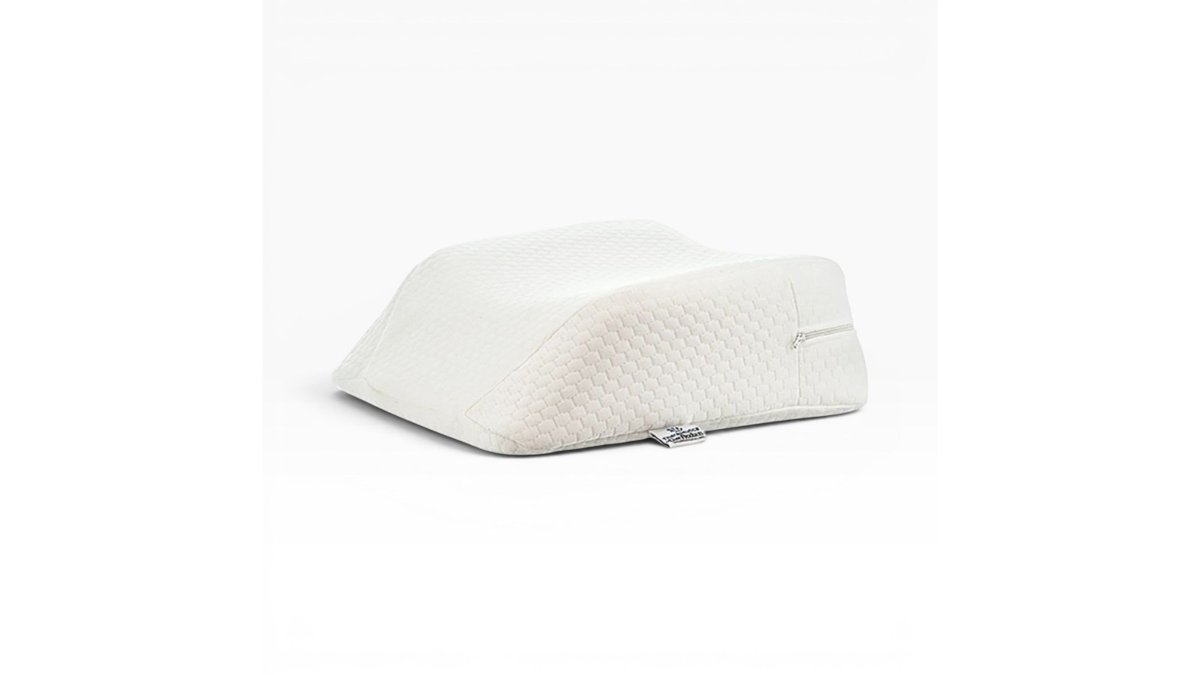
Positioning for seated posture and head stabilization
Your pillow's effectiveness depends on how you position it. The goal is supporting your cervical spine in its natural curve while keeping your shoulders relaxed.
Sit with your back against the seat and shoulders resting naturally. Your pillow should fill the neck-to-shoulder gap, cradling your head without tilting it backward or letting it drop forward. Head tilting backward means the pillow is too high or too far back; dropping forward means it's too far forward or too low.
The pillow should support your neck from below, not push your head from behind. This positioning prevents the pressure points that trigger pain. Your chin should be parallel to the ground, not tilted up or down.
Many people mistakenly use the pillow as a headrest supporting the back of the head, which creates pressure at the base of the skull and amplifies chronic pain. Instead, support the curve of your neck and let your head rest naturally on top.
A quick self-check before you settle in: tuck your chin slightly, then relax. If your chin drops toward your chest when you relax, the pillow is too low. If your chin lifts and your throat feels exposed, the pillow is too high. Neutral is when your ear sits roughly above the midpoint of your shoulder when viewed from the side.
Adjusting fit for different body types and shoulder width
Shoulder width affects which pillow height and firmness work for you. Broad-shouldered people need higher loft and firmer support so the pillow doesn't compress under their head's weight; narrower shoulders need less height to avoid tilting the head backward.
To estimate required loft, measure from the base of your neck to the outer edge of your shoulder with a soft tape; that distance roughly equals the side-support height your pillow needs. Shorter side wings let your head roll to one side; much taller ones push it into a tilt.
Neck circumference matters too: a narrow opening can feel like choking and make you unconsciously tense your neck, while too wide an opening slides around with no lateral support. Look for an opening that sits snugly without pressure on the front of your throat.
If your pillow feels too high, you can sometimes reduce loft by adjusting how you position it, tilting it slightly or moving it higher on your shoulders. If it feels too low, you might need a different pillow designed for your body type.
Forward head posture (common in desk workers) often needs slightly higher loft than you'd expect, gently guiding your head back to neutral instead of letting it drift forward. This matters because forward head posture compresses the cervical spine, triggering tension and stiffness.
Test your pillow's fit on a short car ride before a full flight: a pillow comfortable for 30 minutes may create pressure points after three hours. Shifting it up or down your neck periodically during travel helps prevent pressure point buildup.
Matching technique to your seat: planes, trains, cars, and buses
Seat geometry changes how a pillow performs. A pillow that works on a reclining business-class seat can fail in a car with a fixed, upright headrest.
Airplane seats. Economy seats recline only a few inches and their headrest pushes your head forward, so a pillow supporting the sides of your neck beats one pushing from behind. Fold adjustable headrest wings inward first, then add the pillow only if a lateral gap remains.
Train seats. Train seats recline further and have taller backs, so your head falls to one side rather than forward, making lateral support more important than rear support. A neck roll or tall side wings outperform a low-profile U-shape here.
Car seats. Car headrests sit close to the back of your head to reduce whiplash, limiting how far back you can lean. A thick rear-support pillow pushes your head forward into the posture you're avoiding, so favor a thin rear profile with strong side support, or a neck roll that attaches to the seat.
Buses and rideshares. Seats vary wildly and often lack adjustable headrests. A pillow that can be repositioned, such as one with an adjustable strap or a water chamber you can partially fill, gives you more control than a fixed-shape foam pillow.
Duration, breaks, and pressure-point rotation
Even a well-fitted pillow becomes uncomfortable eventually, since sustained pressure on the same skin and muscle causes discomfort regardless of alignment. On trips over two hours, shift the pillow every 45 to 60 minutes, or remove it and do slow neck rotations if you're awake.
If you're driving, take a break every couple of hours to stand and move. If you're a passenger or on a plane or train, get up and walk the aisle when it's safe. Pillow support reduces strain, but it doesn't replace movement.
When to Seek Professional Guidance
A travel pillow for chronic neck pain is a comfort tool, not a treatment. It can reduce strain during seated rest and help you avoid post-travel soreness from hours of poor alignment, but it cannot correct a structural problem, resolve a pinched nerve, or substitute for an evaluation.
What a travel pillow can and cannot do
A pillow helps by keeping your head and neck neutral while you rest in a seat, reducing the sustained muscle tension that builds when your head drifts forward or sideways for hours. For many people with chronic neck pain, that reduction makes travel less punishing.
A pillow cannot change the underlying cause of chronic neck pain, which may include degenerative disc changes, facet joint irritation, muscle strain patterns, or years of postural habits. Some respond to support and posture changes; others need assessment, imaging, or targeted exercise. No pillow addresses those directly.
Red flags that mean stop and get evaluated
Most neck pain is not an emergency, but certain symptoms warrant prompt medical attention rather than a new pillow. Seek care if you experience any of the following:
- Pain that radiates down an arm, especially with numbness, tingling, or weakness in the hand or fingers
- Loss of coordination, difficulty walking, or clumsiness in your hands
- Neck pain following a fall, car accident, or other trauma
- Severe headache with neck stiffness, fever, or sensitivity to light
- Pain that wakes you from sleep repeatedly or is worsening week over week
- Difficulty swallowing, speaking, or controlling your bladder or bowels alongside neck symptoms
These signs can indicate nerve involvement or other conditions that need a clinician's assessment. A travel pillow is not the right tool for any of them.
What a clinician actually evaluates
If chronic neck pain persists for months without improvement, a primary care provider or physical therapist can assess what a pillow cannot: cervical range of motion, muscle guarding and trigger points, posture while sitting and standing, and nerve involvement. They may recommend imaging, a specialist referral, or physical therapy.
A physical therapist can distinguish pain driven by muscle tension, which often responds to support and targeted strengthening, from structural or nerve pain needing a different approach. Combining a properly fitted pillow with daily neck and upper-back mobility work often beats either alone.
Making a pillow part of a broader plan
If your pain is tied to tech neck or forward head posture, your workspace setup matters as much as your travel pillow. Raising your monitor to eye level, keeping elbows near 90 degrees, and taking standing breaks every 30 to 45 minutes reduces the daily load on your neck, which carries over to travel days.
If your pain is tied to sleep position, your home pillow matters more than your travel one, since you spend far more hours in bed than in a seat. A travel pillow supplements a home setup that already works, not replaces it.
Frequently Asked Questions
What features should I look for in a travel pillow for chronic neck pain?
Look for contoured cervical design that maintains neutral alignment, adequate pillow loft to fill the gap between your neck and shoulders, and memory foam or adaptive materials that provide consistent support without flattening. The pillow should support your sleep position (side or back), prevent head dropping during seated rest, and have a portable design if you travel frequently. Adjustable firmness options help accommodate different comfort preferences and pain levels.
Is memory foam or an inflatable travel pillow better for neck support?
Memory foam travel pillows conform to your head and neck shape, providing targeted pressure point relief. Inflatable pillows are lighter and more compact. For chronic neck pain, memory foam or water-based adaptive pillows can provide support.
How should I position a travel pillow to support my neck?
Position the pillow so it cradles your head while supporting the natural curve of your cervical spine. When seated, the pillow should prevent your head from tilting forward or sideways. The contoured section should fit snugly against your neck, filling the gap between your shoulder and ear. Avoid tilting your head excessively; keep your ears aligned over your shoulders. If your pillow has a strap, secure it to your seat to maintain consistent positioning throughout your rest period.
Can a travel pillow help prevent neck pain on a long flight?
Yes, a properly designed travel pillow can significantly reduce post-flight soreness by maintaining cervical spine alignment during seated rest. Long flights expose your neck to hours of poor posture and head dropping, which triggers stiffness and pain. A travel pillow with adequate support, memory foam density, and ergonomic shape prevents these alignment issues, allowing your neck muscles to relax rather than strain. The key is selecting one that matches your sleep position and body type for maximum effectiveness.